Blog · Maintenance guide
A well-maintained water meter protects your investment and ensures every reading is accurate. Follow these practical tips from Dasmesh Engineering Works to get the most from your meter.
Why it matters
Water meters are precision instruments. Dust, debris, incorrect installation and neglect can cause inaccurate readings, premature wear and costly billing disputes.
Since 1958, Dasmesh Engineering Works has manufactured meters designed for durability. With a little routine care, a quality meter will deliver reliable performance for years.
Whether you use a residential, commercial or industrial meter, the maintenance principles below apply across our full range of water metering solutions.
Maintenance tips
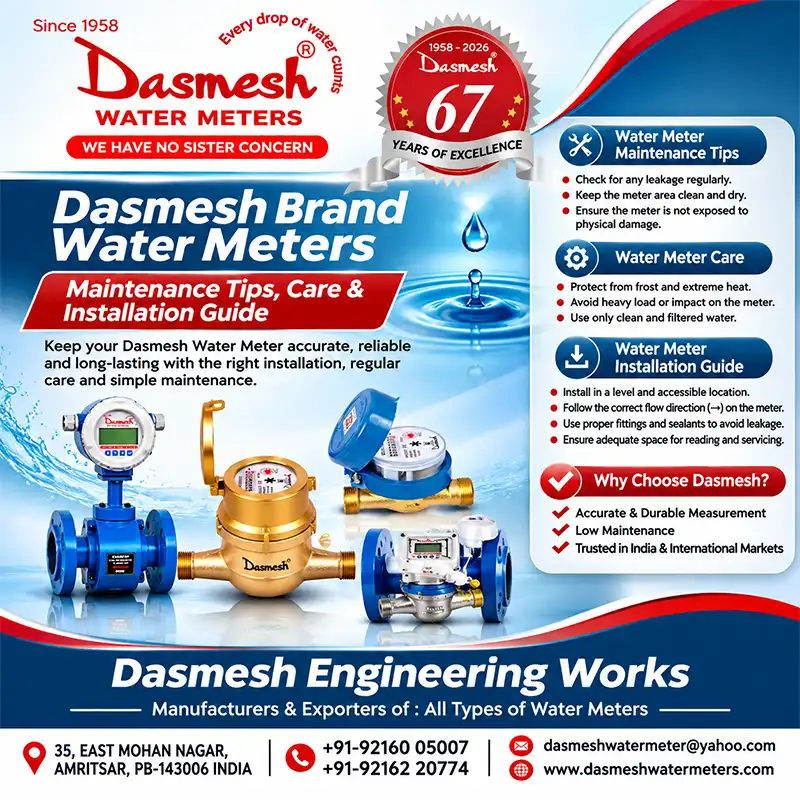
Ensure the meter box or chamber is free from dirt, standing water, roots and debris. A clean chamber makes readings easier and prevents corrosion of the body and fittings.
Check the chamber cover is intact so rainwater and insects do not enter.
Always install the meter in the direction of flow indicated by the arrow on the body. Incorrect orientation causes reverse rotation, inaccurate registration and extra wear.
Keep the meter fully filled with water and avoid air pockets in the line.
Fit a strainer or filter before the meter to stop sand, grit and scale from reaching the measuring chamber. Clean the strainer periodically.
Debris is one of the most common causes of a meter running slow or stopping altogether.
Water meters should not be exposed to freezing temperatures or direct sunlight. Frost can crack the body, while heat degrades seals and plastic components.
Insulate exposed pipes and meter chambers in cold regions.
Turn off all taps and check whether the meter's low-flow indicator still moves. If it does, you likely have a leak in the line or a dripping fixture.
Fix leaking joints and worn washers promptly — small leaks add up to big bills.
Have the meter tested and calibrated at recommended intervals, especially for commercial and industrial installations where accuracy directly affects billing.
Our team can advise on testing schedules and replacement for meters that consistently read outside tolerance.
Know the signs
Some issues are best handled by trained technicians. Contact Dasmesh or your authorised service partner if you notice any of the following:
Prompt professional attention prevents larger failures, protects water quality and keeps billing accurate.
Our team supports residential, commercial and municipal installations across India and export markets.
Request serviceFrequently asked
Most residential meters benefit from a visual inspection every 6–12 months and calibration testing every 4–5 years. Commercial and industrial meters may need more frequent checks depending on water quality and usage.
A sudden high reading usually points to a hidden leak, a running toilet or an irrigation system left on. Perform a leak test by closing all taps and watching the low-flow indicator on the meter.
We recommend professional installation to ensure correct orientation, proper sealing and compliance with local plumbing codes. Incorrect installation is a leading cause of inaccurate readings and early meter failure.
Yes. Our meters are manufactured to IS:779/94, IS:2373/81 and ISO-4064 standards and are covered by a manufacturer's warranty against defects. Contact us with your model and serial number for warranty support.
Need help?
If your water meter is reading inaccurately, showing signs of wear, or you need advice on installation and maintenance schedules, our team is here to help.